
If you have ever stood in a small Nigerian kitchen at peak hours—orders flying in, heat rising, and staff moving shoulder to shoulder—you already know the struggle. Whether it is a food business in Lagos, a buka in Benin, or a growing home-based catering hustle, space is often limited, but demand is not.
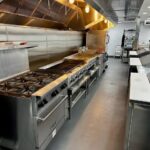
The good news? You don’t need a massive factory to produce like one. With the right equipment, even the smallest kitchen can run like a smooth production line.
Let’s break it down.
Multipurpose Industrial Cooker
In many Nigerian kitchens, one gas burner is doing everything—boiling rice, frying stew, cooking soup—all at once. That’s a bottleneck.
A multipurpose industrial cooker (especially double or four-burner gas cookers) changes the game. It allows you to cook different meals simultaneously without waiting turns. Imagine preparing jollof rice, egusi soup, and frying chicken at the same time—your output practically doubles.
Food Processor or Blender (Heavy-Duty)
Manually grinding pepper, onions, and tomatoes slows down production—and drains your staff.
A heavy-duty blender or food processor speeds things up massively. In Nigerian cooking, where pepper mix is a daily necessity, this equipment is a must-have. Instead of spending 1–2 hours grinding, you’re done in minutes.
For businesses handling bulk orders, this alone can save hours daily.
Chest Freezer
In Nigeria, where electricity can be unpredictable, a chest freezer is more than storage—it’s strategy.
It allows you to:
Preserve bulk purchases (fish, chicken, meat)
Pre-prep ingredients ahead of time
Reduce waste and emergency market runs
For example, a small catfish processing business can clean, portion, and freeze products in advance, turning daily stress into a structured workflow.
Stainless Steel Work Tables
Many small kitchens use wooden tables or cramped surfaces. This limits efficiency and hygiene.
Stainless steel tables give you:
More organized prep space
Easier cleaning (important for food safety)
Room for multiple staff to work at once
When your prep area is structured, your entire kitchen flows better—like a real production line.
Deep Fryer
Frying in small pots is time-consuming and inconsistent, especially for items like puff-puff, akara, or chicken.
A deep fryer allows you to fry in batches, maintain consistent oil temperature, and deliver uniform quality. For fast-selling items, this is a serious upgrade.
Sealing Machine
If you sell packaged food—like dried catfish, spices, or takeaway meals—a sealing machine is essential.
It:
- Extends shelf life
- Improves product presentation
- Builds customer trust
In today’s Nigerian market, packaging can be the difference between a roadside product and a supermarket-ready brand.
Shelving and Storage Racks
Clutter is the enemy of productivity. Many small kitchens lose time simply because items are not properly arranged.
Simple storage racks help you:
Organize ingredients and tools
Reduce movement and confusion
Maximize limited space
When everything has a place, work becomes faster and less stressful.
Final Thoughts
Running a food business in Nigeria is not easy—rising costs, power issues, and high customer expectations can be overwhelming. But upgrading your kitchen equipment is one of the smartest ways to scale without necessarily expanding your space.
You don’t need to buy everything at once. Start with the equipment that solves your biggest problem—whether it’s slow prep, poor storage, or low output.
Because at the end of the day, it’s not about how big your kitchen is—it’s about how efficiently it works.