
Fellow food dreamer, you’re probably 28, fresh out of university or maybe still juggling a side gig. You’ve got that entrepreneurial fire in your belly to turn fresh cassava into crispy chips, blending spices that make people’s eyes light up, or packaging zobo that sells out faster than you can produce it. Your kitchen smells like ambition. Friends and family rave about your products. You’re posting on WhatsApp status, dropping off packs to neighbours, and dreaming of seeing your brand in Shoprite or even on a plane to Europe. But then reality hits. Customers start asking the dreaded question: “Does this have NAFDAC number?” Supermarkets politely say “no” to your samples. That big order from a distributor falls through because “we only stock registered products.” Suddenly your story shifts from “I’m building something special” to the same tired Nigerian entrepreneur tale we’ve all heard too many times: “The system is hard… rejections keep coming… I’m stuck.” Friend, that story doesn’t have to be yours. Understanding the importance of NAFDAC Registration can change everything.
NAFDAC registration transcends being a governmental stamp. It’s the twist that completely changes the entire narrative for small food processors and packagers like you. It turns “struggling startup” into “trusted brand with real growth potential.” And if you’re between 18 and 40 with that raw entrepreneurial hunger, this one certificate can be the exact catalyst that takes your pantry-ready creations from local hustle to national shelves – and even export markets.
Embracing NAFDAC Registration can redefine your journey and unlock new opportunities.
Understanding the Importance of NAFDAC Registration
Starting a food business in Nigeria is exciting but brutally real. Without NAFDAC, you’re playing in the shadows. Markets are flooded with unregistered packaged snacks, spices, beverages, and ready-to-eat meals. Enforcement officers can seize your stock. You risk fines, shutdowns, or even prosecution for selling pre-packaged food without approval. Supermarkets – the ones that can actually scale your sales – won’t touch you. Online platforms get cautious. And forget exports; international buyers and even neighbouring African countries demand proof that your product meets safety standards. I’ve spoken to dozens of young processors in your exact shoes. The stories are heartbreakingly similar: months of production, beautiful packaging, solid recipes… but zero traction beyond street sales and family orders. One lady in Lagos told me she spent two years “managing” before she realised her lack of registration was silently killing her dream. Another guy in Enugu watched his competitor (who got registered) land a contract with a major chain while he kept hearing “come back when you have the number.” That’s the old story. Now let me show you the new one – the one that starts off the moment you decide NAFDAC approval is non-negotiable.
First, instant credibility and consumer trust. Nigerians have been educated by NAFDAC campaigns: “Check the NAFDAC number before you buy.” When your product carries that official registration number, people don’t just buy; they buy with confidence. Parents feel safe giving it to their kids. Health-conscious buyers choose you over the unregistered option. That trust translates directly into repeat purchases and word-of-mouth that money can’t buy.
Second, you unlock real market access. Supermarkets, pharmacies, hotels, and big distributors have strict policies: no NAFDAC number = no shelf space. Suddenly your chips or spices can sit proudly beside the big brands. That single move can multiply your sales volume overnight. Many young entrepreneurs I know report 3x–5x growth in revenue within the first year of registration simply because formal retail doors swing open.
Third, export opportunities become realistic – not just a distant dream. NAFDAC registration is your ticket for health certificates and export permits. Whatever the country you’re targeting, buyers want assurance your product is safe and compliant. With approval, you can tap into the growing demand for authentic Nigerian snacks, spices, and ready-to-eat foods in the diaspora. Some small brands are already shipping containers after getting registered – and the profit margins on exports are life-changing for a young hustler.
Additionally, you have legal protection and peace of mind. No more looking over your shoulder. Your business is compliant. You’re of the target of raids, product seizures, and those painful “stories” of sudden shutdowns. You can focus on innovation: new flavours, better packaging, scaling production – instead of worrying about regulators knocking on your door.
Fifth, access to bigger opportunities and support systems. Banks and investors take you more seriously. Government grants, MSME programmes, and even international funding partners often require proof of regulatory compliance. NAFDAC itself has special streamlined guidelines for micro and small enterprises (MSMEs) because they know people like you are the future of Nigeria’s food industry. Reduced fees, simplified processes, and dedicated support for kitchen-scale or small-factory operations are all available.
The most exciting reality for driven young entrepreneurs like you is that game-changing mindset shift that comes with regulatory approval. When you hold that NAFDAC certificate, something inside you changes. You stop seeing yourself as “just a small processor.” You start operating like a serious brand. You invest in proper labeling, quality control, and systems because you know the stakes are higher – and the rewards are bigger. Your confidence soars, customers treat you with respect, partners want to collaborate and that entrepreneurial fire explodes because you’re no longer fighting invisible barriers. I’ve seen it happen again and again. A 32-year-old lady in Abuja who turned her grandmother’s pepper soup recipe into packaged seasoning went from selling 12-15 packs a week to supplying three supermarket chains and eyeing export after registration. A 25-year-old guy in Ibadan scaling his plantain chips business landed a corporate catering contract worth millions simply because his packaging now carried that magical number. These aren’t fairy tales – they’re the new reality when you stop the stories and get approved.
Now, let’s get practical. FDI Hub exists to give small food brands the exact roadmap to do it right the first time. Our latest webinar was tagged “How to Get Your NAFDAC Registration WITHOUT STORIES.” We broke down the entire process.
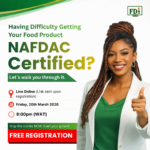
That session was free, but the real gold is the NAFDAC DIY Toolkit we created specifically for young processors like you. It contains everything you need: step-by-step checklists, ready-to-use document templates, common rejection fixes, labeling rules, and even a facility setup guide tailored for small-scale or shared facilities. No middlemen. No confusion. Just clear, actionable steps that respect your limited time and budget. The key is doing it right from day one.
Dear entrepreneur, you are writing your story, and it starts with NAFDAC registration. Stop waiting. Stop managing. Stop the stories. Grab the NAFDAC DIY Toolkit. It’s designed exactly for people like you – driven, motivated, ready to turn raw ingredients into pantry staples and beyond. Whether your product is snacks, spices, drinks, or ready meals, this toolkit gives you the complete playbook. And if you missed the live webinar, don’t worry – the recording and resources are still available through them. The opportunity to level up is still wide open.Your kitchen hustle deserves to become a movement. Your products deserve to be trusted nationwide and beyond. Your entrepreneurial spirit deserves every advantage. Get registered. Rewrite your story. Start your growth. The world is waiting for your brand.

Ready to change your narrative? Grab the NAFDAC DIY Toolkit. Your empire starts with one smart decision. Let’s build it together.